Mapping the Influence of Regional Regulations on Software Development Priorities in Virtual Gaming Industries
Written by Willa Flores · Jun 6, 2026
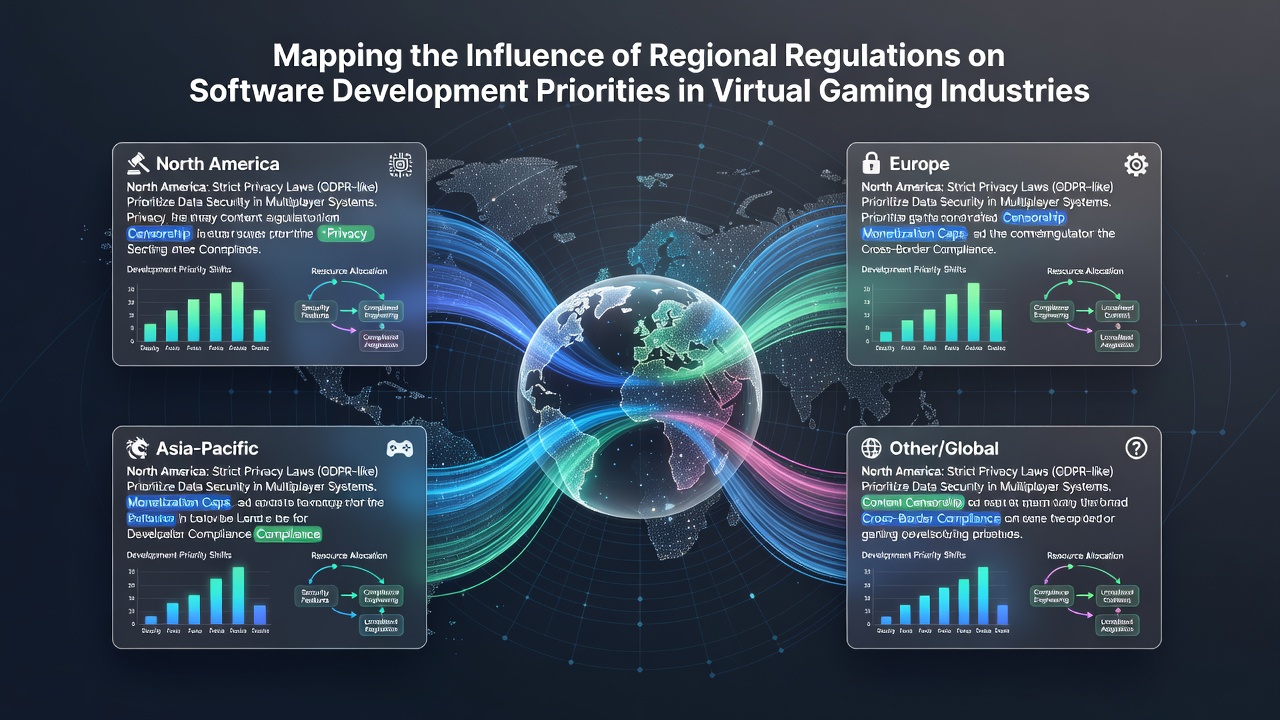
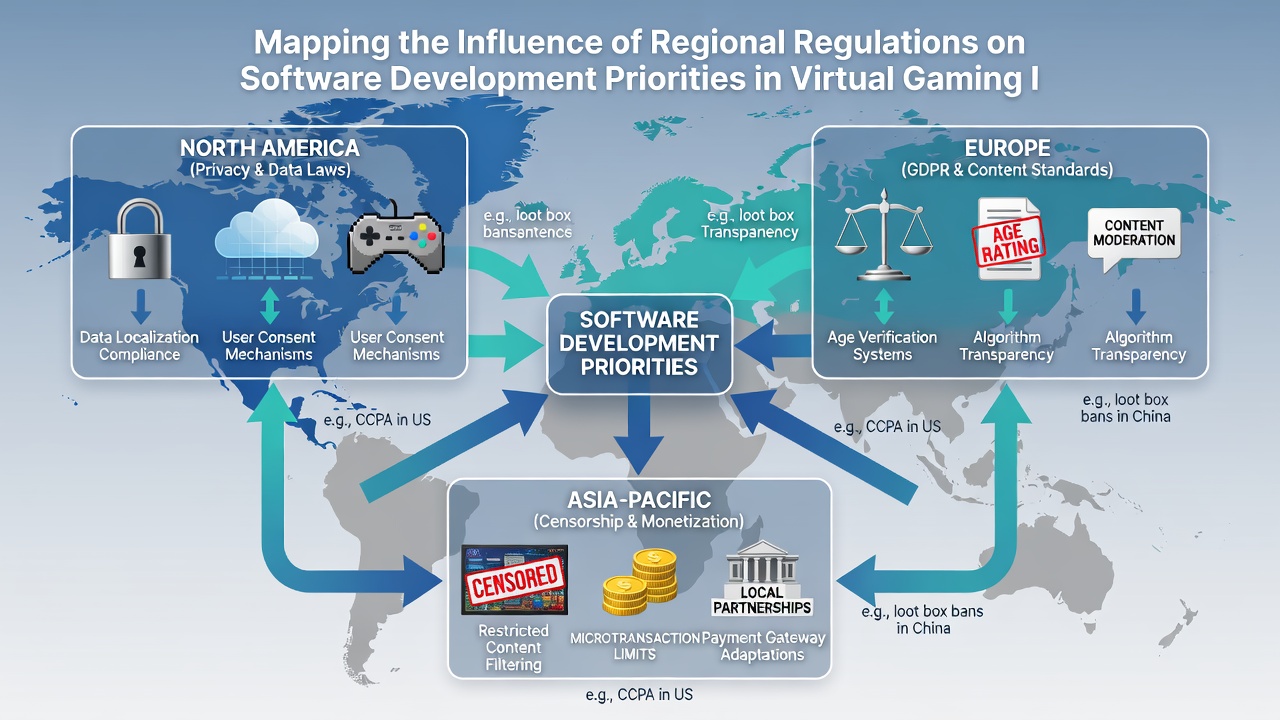
Mapping the Influence of Regional Regulations on Software Development Priorities in Virtual Gaming Industries
Regional regulations continue to shape software development priorities across virtual gaming industries as companies adjust codebases, architecture choices, and feature roadmaps to meet compliance requirements. Developers allocate resources toward data handling protocols, content moderation systems, and payment integrations that align with local statutes, while balancing performance demands in multiplayer environments and virtual reality platforms. Observers note that these adjustments often occur during early design phases rather than as afterthoughts, which reduces retrofit costs later in production cycles.
European Frameworks Drive Data and Moderation Focus
The European Union's Digital Services Act imposes obligations on platforms that host user-generated content, prompting virtual gaming studios to embed automated detection tools and human review workflows directly into their engines. Studios working on cross-border titles must track user interactions more granularly, which leads engineering teams to prioritize secure logging mechanisms and consent management modules. Research from the European Commission's digital strategy reports shows increased investment in these areas among major developers operating in multiple member states. Because the rules apply extraterritorially, studios based outside Europe still restructure backend services to avoid service disruptions for EU users.
Privacy expectations under GDPR further influence architecture decisions. Teams implement data minimization routines and encryption standards at the asset level, which affects how game telemetry and player profiles are stored. Those adjustments sometimes require new middleware layers that separate personal identifiers from gameplay analytics, a pattern documented in industry briefings from the Interactive Software Federation of Europe. Development schedules now incorporate dedicated compliance sprints that run parallel to core feature work.
North American Standards Shape Monetization and Accessibility
In the United States, state-level privacy statutes and federal guidelines around children's data steer studios toward granular age verification and parental control features. Developers targeting younger audiences integrate these capabilities into account systems early, which alters database schemas and API designs. The Entertainment Software Association has tracked rising expenditures on compliance tooling among member companies, particularly those releasing live-service titles that collect persistent player data. California's CCPA amendments, for instance, have encouraged teams to build opt-out flows that function seamlessly across console, PC, and mobile builds.
Canadian regulatory updates on digital commerce have similarly prompted changes in in-game transaction handling. Studios adjust payment processing pipelines to accommodate provincial consumer protection rules, which often means rewriting checkout sequences and receipt generation logic. Observers tracking these shifts report that accessibility mandates also receive dedicated engineering attention, with teams embedding screen-reader support and customizable control schemes as standard rather than optional add-ons.
Asia-Pacific Requirements Influence Localization and Security
China's content approval processes and data localization rules compel developers to maintain separate builds that route player information through domestic servers. This separation influences network architecture choices and forces early decisions about which features can be included globally versus region-specific versions. Reports from the China Audio-Video and Digital Publishing Association indicate that approval timelines now factor into release planning, which leads studios to front-load moderation and cultural adaptation work. Australian classification guidelines similarly require content flagging systems that integrate with age-gating mechanisms, prompting additional layers of metadata tagging within asset pipelines.
South Korean regulations on loot box mechanics have driven transparency features such as probability disclosures that appear within user interfaces. Development teams embed these displays into reward systems from the outset, which changes both frontend rendering code and backend randomization algorithms. Data from the Korea Creative Content Agency shows measurable increases in hours spent on compliance verification during quality assurance phases.
Cross-Regional Patterns in Resource Allocation
Across jurisdictions, virtual gaming companies demonstrate consistent patterns of reallocating engineering bandwidth toward compliance-related modules. Security audits, localization frameworks, and reporting dashboards appear earlier in project timelines, which compresses time available for experimental gameplay mechanics. Industry analyses from academic centers such as the MIT Game Lab highlight how these priorities affect hiring, with studios recruiting more specialists in regulatory technology and data governance. The result is a more modular approach to engine design, where compliance components can be toggled or updated without rebuilding entire titles.
June 2026 marks the scheduled rollout of several updated enforcement mechanisms under existing digital commerce frameworks in multiple regions, which has already prompted studios to schedule preparatory code reviews. These reviews focus on audit trails and user notification systems that will satisfy forthcoming documentation requirements. Development roadmaps shared publicly by several large publishers reflect dedicated milestones tied to these deadlines, illustrating how regulatory calendars now intersect directly with software release cycles.
Conclusion
Regional regulations continue to map directly onto software development priorities in virtual gaming industries through measurable shifts in resource allocation, architecture decisions, and feature sequencing. Developers respond by embedding compliance capabilities at foundational levels, which produces more adaptable codebases capable of serving diverse markets without repeated overhauls. Data from regulatory bodies and industry associations across Europe, North America, and Asia-Pacific regions shows sustained investment in these areas, confirming that regulatory alignment remains a core driver of technical planning rather than a peripheral concern.