Global Regulatory Evolutions Transforming Software Strategies in Cross-Border Mobile Gaming
Written by Paul Schmitt · Jul 13, 2026
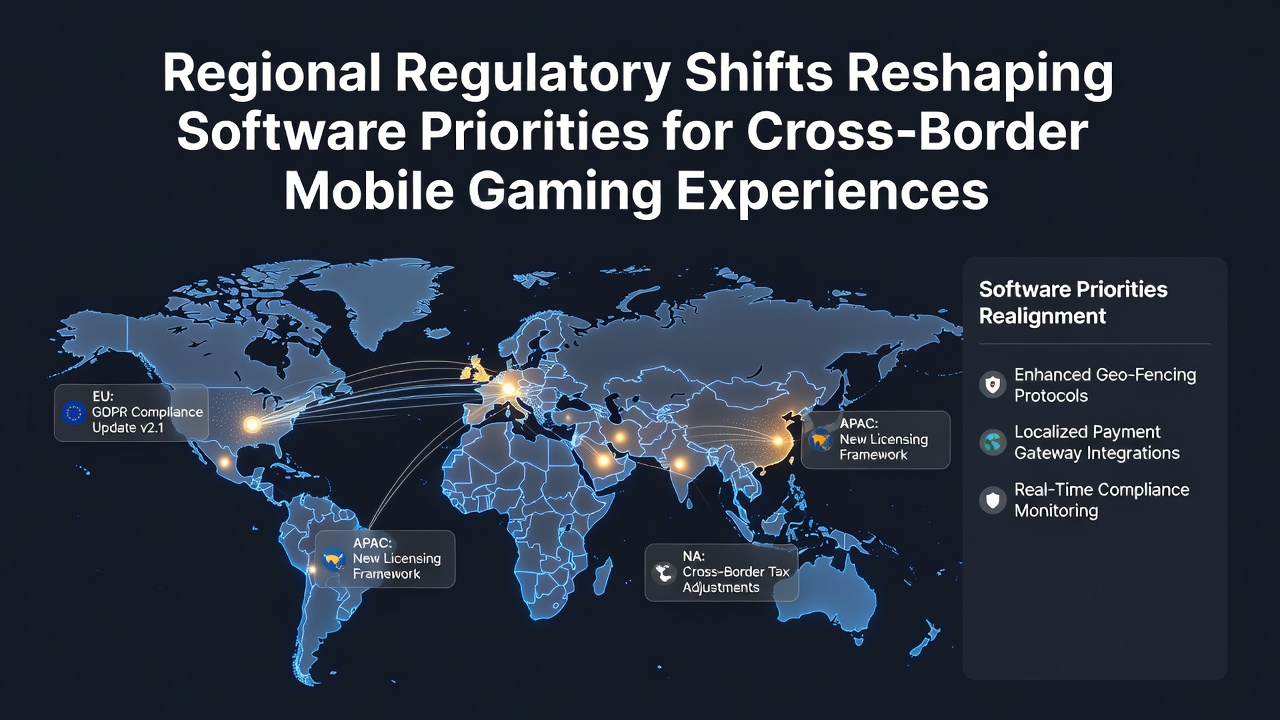
Global Regulatory Evolutions Transforming Software Strategies in Cross-Border Mobile Gaming
Regional regulatory changes have started reshaping how developers approach software design for mobile gaming platforms that operate across multiple countries, and these adjustments focus on compliance with data protection rules, content standards, and payment systems that vary by jurisdiction. In July 2026 several jurisdictions introduced updated guidelines that require game studios to implement region-specific features from the initial development stage rather than as afterthoughts.
Data Privacy Rules Drive Core Architecture Decisions
European data protection requirements, particularly those updated through the Digital Services Act framework, compel developers to build consent management systems directly into game engines so players receive clear options for data handling before any gameplay begins. Observers note that studios now integrate these modules early because retrofitting them later increases costs and delays releases. In contrast, regulations in parts of Asia emphasize real-name verification for certain game categories, which pushes software teams to create flexible backend systems capable of toggling verification flows based on user location detected at login.
Research from industry reports shows companies allocating larger portions of their budgets to modular codebases that allow quick swaps of privacy controls without rewriting entire applications. This approach lets teams maintain a single global version while activating different compliance layers depending on where each player connects from.
Content Moderation Tools Adapt to Local Standards
Countries maintain distinct rules around in-game chat, virtual item trading, and visual content, so developers now embed configurable moderation filters that adjust automatically according to detected regions. One study revealed that platforms using these dynamic filters reduced compliance violations by significant margins compared with those relying on uniform global policies. Software priorities have shifted toward machine learning models trained on region-specific datasets to flag potential issues before they reach players.

Those who've examined recent project roadmaps find that many teams now schedule separate testing cycles for each major market instead of a single worldwide quality assurance pass. This practice emerged after several high-profile releases encountered blocks in specific territories due to overlooked local content rules.
Payment and Monetization Systems Reflect Regional Preferences
Cross-border mobile games must accommodate diverse payment methods and tax structures, which has led developers to prioritize integration of localized billing gateways early in the design process. Data from regulatory filings indicates that platforms supporting multiple regional payment options achieve higher retention rates in markets with strict financial oversight. Engineers therefore design monetization frameworks with interchangeable payment modules that activate based on detected user locations and applicable transaction rules.
According to analyses from the European Commission digital strategy resources, new guidelines effective in mid-2026 require transparent disclosure of all virtual currency mechanics, prompting software updates that display cost breakdowns in local currencies and languages automatically. Similar requirements appear in Australian communications authority documentation, where operators must ensure players understand spending limits before purchases complete.
Testing and Deployment Pipelines Evolve for Compliance
Development teams now incorporate automated compliance checks into continuous integration systems so code commits trigger scans against current regional rulesets. This change reduces the risk of last-minute rejections when submitting updates to app stores that enforce local laws. Experts have observed that projects using these integrated checks launch on schedule more consistently than those handling reviews manually.
Case examples from studios operating in multiple continents illustrate how early adoption of geo-aware deployment tools prevents distribution delays. These tools route updates through different approval pathways depending on the target markets, allowing simultaneous releases where regulations permit while staggering launches elsewhere.
Conclusion
Regional regulatory shifts continue to influence software priorities for cross-border mobile gaming by requiring adaptable architectures that handle privacy, content, and payment variations without fragmenting the core experience. Developers respond through modular designs, automated testing, and location-aware features that maintain compliance across borders. As additional rules take effect in 2026 and beyond, these technical adjustments remain central to successful international game distribution.